I Built the Game I Played as a Kid, With AI as My Copilot
One of the first games I ever owned was River Raid on the Atari 2600. I wanted that feeling back, so I planned Black Eagle, designed its first pieces in Figma and built it with Jammes, my AI assistant.

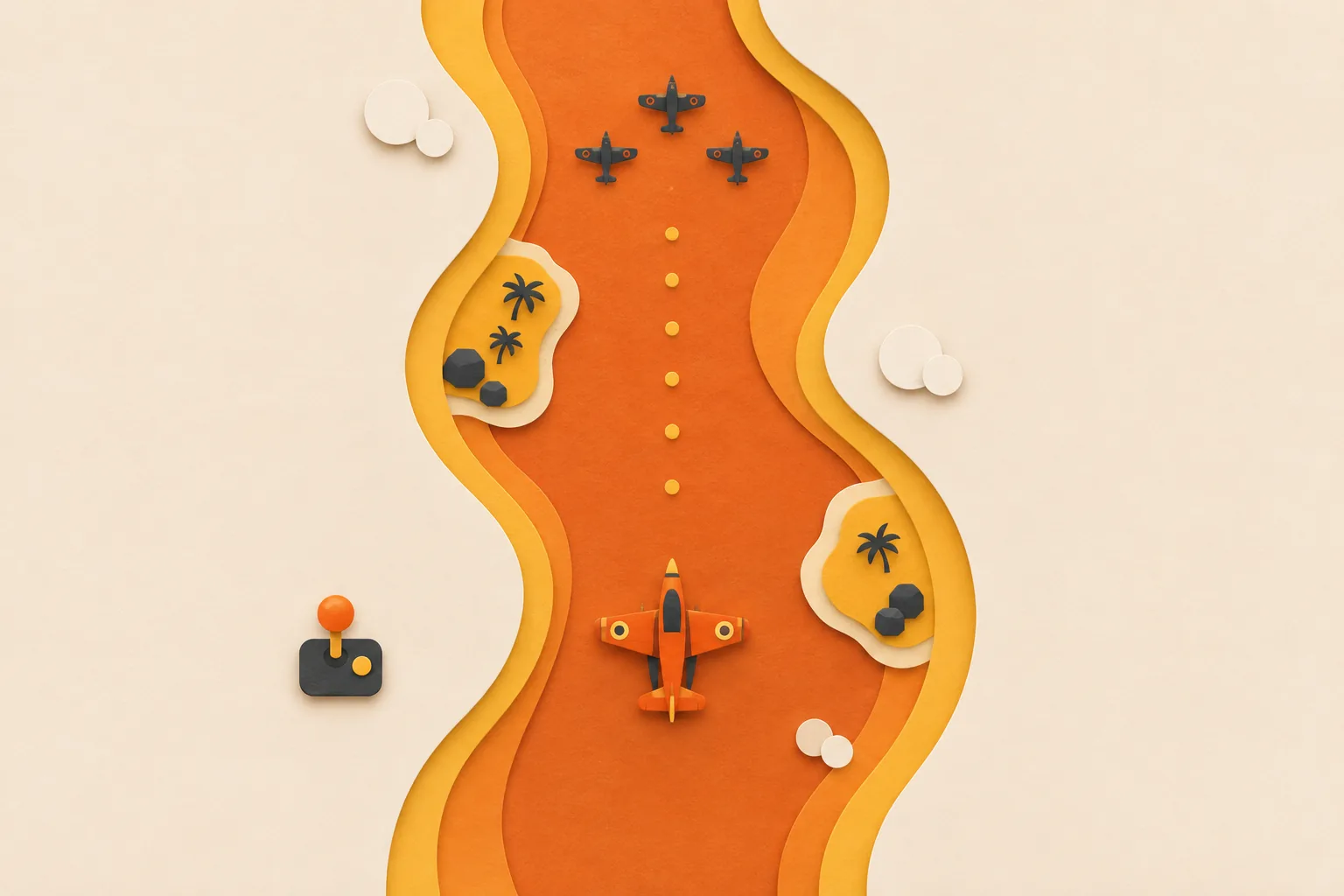
One of the first video games I ever owned was River Raid on the Atari 2600, Carol Shaw's classic from 1982. A tiny jet, a river that never ended, and a fuel gauge that punished greed. I played it until the joystick gave up. When I finally sat down to build something purely for fun, that was the feeling I wanted back.
Some afternoons never really end. They just wait for you to press start again.
Black Eagle is the result. It is a top-down arcade shooter that runs in any browser, free and without an account. You shoot down enemy planes, dodge their fire, grab the crates they drop and, from level 10, take on a mothership. You can play Black Eagle here, and it has a global leaderboard, because writing your name at the top was half the point of an arcade.
Nearly that many River Raid cartridges sold by January 1984. Its creator, Carol Shaw, is widely believed to be the first female professional video game designer.
It started with a plan, not with code. I named the game, designed the plane and a few key elements in Figma, and wrote down the rules: what you shoot, what shoots back, what the crates do and when the mothership shows up. Then I built it together with Jammes, my AI assistant. I set the direction and judged every result on the screen, and Jammes wrote and reshaped the code.
The first surprise was the screen. The original was balanced for a narrow, phone shaped field. Stretched across a desktop monitor, the sky became three times wider with the same number of enemies, and the game went from tense to boring. The fix was not layout, it was rules. The spawn rate now grows with the width, only fighters near you are allowed to aim at you, and your horizontal speed grows with the square root of the width, so dodging stays precise instead of twitchy.
The second surprise was a flicker. Clicking the plane on my home page launches a 3D tunnel that flies you into the game. In still frames it looked great. In motion it stuttered, and every fix I tried by eye made no difference. Measuring it frame by frame did: a single frame was stuck for almost a full second while the browser repainted every ring of the tunnel at a new scale. One CSS property, will-change, told the browser to stop doing that, and the tunnel went to a steady 60 frames per second.
The leaderboard is where I slowed down on purpose. A score table that anyone can write to from a browser is an invitation. The table denies everything by default, every score goes through the server with a signed token for that run, and the server checks that the score and the level fit the time actually played. It is plausibility, not proof, but it keeps the board honest without asking anyone to sign up.
What changed for me is not that AI writes code. It is that the distance between a childhood memory and something you can actually play shrank to a conversation. The craft moved to deciding what good feels like, and to noticing fast when it does not. Go fly it. If you beat my score, the leaderboard will let me know.